Our impact: Syphilis
Eight million adults acquired syphilis in 2022 – and 700,000 babies were born with it. MedAccess is working to increase access to syphilis testing for pregnant women, so they can receive treatment to keep themselves and their babies healthy.
© iStock/iLexx
Global syphilis overview
Syphilis is one of the most common sexually transmitted infections worldwide, with eight million new cases among adults each year. While untreated syphilis can cause severe health problems and even death, many people do not experience symptoms. As a result, they can unknowingly pass the infection to others through sexual contact or blood transfusion, or from mother to child during pregnancy.
Congenital syphilis, which occurs when the infection passes to an unborn baby during pregnancy, is the second leading cause of preventable stillbirths worldwide. In 2022, 700,000 babies were born with congenital syphilis; nearly one-third of those babies were stillborn or died shortly before or after birth. Babies who survive can experience serious health effects, including anaemia, blindness, deafness, developmental delays and seizures.
The importance of testing during pregnancy
Testing for syphilis is essential to prevent the infection from passing to babies during pregnancy. However, more than half of adverse birth outcomes caused by the infection – including miscarriages, stillbirths, newborn deaths and preterm births – occurred in pregnant women who received antenatal care but were not tested for syphilis.
If the infection is detected, it can be easily cured with benzathine penicillin, a widely available antibiotic. Increasing testing rates will ensure more cases of syphilis are diagnosed and treated, protecting the health of mothers and babies.
“Every year hundreds of thousands of syphilis infections pass undiagnosed from mothers to their unborn children, resulting in stillbirths, congenital defects, or deaths of their newborns. In many cases they never even know the cause.”
Ms. Joy Phumaphi
Former interim co-CEO, CHAI (2021)
Our syphilis agreement
Learn more about how we’re increasing access to syphilis testing for pregnant women:
Impact as of end-2025:
31m
pregnant women accessing dual HIV/syphilis tests
770k
pregnant women with syphilis treated
162k
stillbirths averted
Case study
Combining HIV and syphilis testing
While HIV testing in antenatal care has reached high levels in many countries, syphilis screening has lagged behind, despite World Health Organization (WHO) guidance that all pregnant women should be tested at their first antenatal visit. This gap contributes to preventable stillbirths, neonatal deaths and other adverse pregnancy outcomes.
Partnering with SD Biosensor
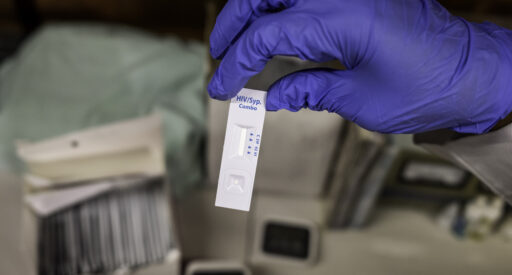
MedAccess partnered with SD Biosensor and CHAI to support the introduction and scale-up of dual HIV and syphilis rapid diagnostic tests, allowing two essential screenings to be delivered in a single visit. By the end of 2025, the partnership had enabled pregnant women in 61 countries to benefit from simultaneous screening for these two major causes of adverse pregnancy outcomes.
Through a volume guarantee, MedAccess reduced SD Biosensor’s market risk, enabling the company to lower the price of its dual HIV/syphilis test to below $1 for public purchasers in more than 100 low- and middle-income countries.
The lower price accelerated a shift from separate HIV and syphilis tests – with countries often forced to choose between the two – to combined testing.
This helped countries integrate syphilis screening into established antenatal care platforms with minimal additional cost or operational complexity. The test also improved efficiency for frontline health workers and aligned dual testing with existing HIV testing budgets.
Generating sustained impact
The agreement enabled rapid adoption and early integration of dual testing into national antenatal screening programmes. Countries scaled more quickly from initial introduction to routine use, helping to close long-standing gaps between HIV and syphilis testing coverage. The entry of SD Biosensor as an additional, competitively priced supplier also strengthened supply security and improved procurement predictability.
Over time, increased demand enabled production efficiencies and further price reductions, reaching a record low of $0.84 per test in 2026. The partnership has helped procurers move from fragmented early uptake towards a more mature and sustainable market, with wider implications for integrated diagnostics.
“Hopefully soon we can eradicate the possibility of any of these diseases being passed down to a child who is just starting their life.”
Dr Akudo Ikpeazu
Former Director/National Coordinator, National AIDS, Viral Hepatitis and STIs Control Programme, Federal Ministry of Health, Nigeria