Our impact: COVID-19
The COVID-19 pandemic put health inequality in the spotlight, with many lower-income countries pushed to the back of the queue for diagnostics, treatments and vaccines. Our agreements helped deliver COVID-19 supplies and essential health products to low- and middle-income countries more quickly.
Global COVID-19 overview
On 11 March 2020, the World Health Organization declared COVID-19 a pandemic. By the end of 2021, more than 14.9 million people had died, either directly or indirectly, from the infection.
As countries raced to respond to the crisis, demand quickly outstripped supply for even the most basic health products, such as gloves, masks and medical gowns, leading to global shortages, volatile prices and export bans. Many countries were unable to purchase vital protective equipment for frontline health workers or essential supplies for routine health services.
Health inequality in action
The situation was most acute in low- and middle-income countries, where some countries were quoted prices 20 times higher than pre-pandemic levels.
While the pandemic led to unprecedented global cooperation to develop vaccines and treatments, and to scale up production of essential health products, access was unequal. People in some high-income countries received COVID-19 vaccine booster shots before people in many African countries had received a first dose.
COVID-19 showed that to ensure everyone, everywhere, has fast, affordable access to lifesaving health products, the world needs resilient supply chains, strong global partnerships and fast, innovative financing.
“The inequities in access to vaccines in poor countries is one of the biggest, collective global failings of our time.”
Mark Malloch-Brown
Former President, Open Society Foundations
Our COVID-19 agreements
Learn more about how we helped increase access to lifesaving vaccines and medical supplies during the COVID-19 pandemic:
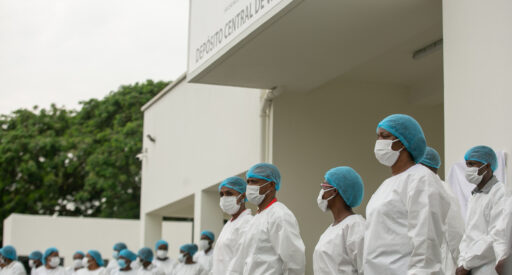
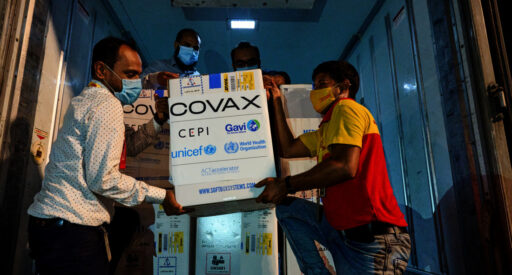
Impact as of end-2022:
2.8b
syringes for COVID-19 and other vaccines supplied
456m
COVID-19 vaccines and other childhood vaccines supplied
9.8m
diagnostic test kits and equipment supplied
Case study
Supporting UNICEF to accelerate the delivery of COVID-19 supplies
UNICEF is the world’s largest buyer of vaccines and one of the largest suppliers of health products, using its purchasing power to negotiate affordable prices for governments and partners. When the COVID-19 pandemic was declared, low- and middle-income countries relied on UNICEF for reliable, predictable supplies of essential COVID-19 and non-COVID-19 products.
To meet country demand for products through its pooled procurement mechanism, UNICEF needed to rapidly scale up procurement. To do this, the mechanism needed additional capital, enabling UNICEF to place larger orders with manufacturers ahead of receiving payment from countries.
Partnering with UNICEF
MedAccess provided a $50 million procurement guarantee, ensuring UNICEF could make larger upfront purchase commitments.
This enabled the delivery of essential health products, including masks, gowns, oxygen concentrators, laboratory tests, rapid tests, syringes and immunisation supplies. As the guarantee evolved, it also supported procurement of COVID-19 and childhood vaccines.
Generating sustained impact
Through our partnership, UNICEF was able to deliver lifesaving vaccines and health products on average seven months sooner than if countries had not had access to supplies secured through its pooled purchasing power.
By the end of 2022, the guarantee helped supply more than 2.8 billion syringes for use with COVID-19 and other vaccines, more than 456 million COVID-19 and other childhood vaccines, and 9.8 million diagnostic tests and testing equipment.
“Innovative financing tools are especially critical now in light of the unprecedented global demand for supplies to respond to the COVID-19 pandemic.”
Etleva Kadilli
Director, UNICEF Supply Division (July 2020)