Medical oxygen with Hewatele
Medical oxygen is essential for regular and critical care. We are partnering with Kenyan oxygen supplier Hewatele to increase access to locally produced oxygen as part of the East Africa Programme on Oxygen Access (EAPOA).
Our
partners

The challenge
Public health
Low blood oxygen, or hypoxemia, is a serious problem caused by issues with blood flow or breathing. It can occur with anaemia, heart disease, tuberculosis, asthma, COPD, and pneumonia, and is a major risk during surgery, labour and delivery.
In low- and middle-income countries (LMICs), one in six children under five and one in five newborns admitted to hospitals suffer from hypoxemia. Also, 15% of pregnant women may face life-threatening complications needing emergency oxygen. Hypoxemia can increase the risk of death by up to seven times, causing over one million preventable deaths yearly in these countries.
The only treatment for hypoxemia is medical oxygen. It is deemed essential but is underfunded. Up to 56% of healthcare facilities in LMICs struggle with limited or no oxygen supply. Access to oxygen in East Africa is even lower; reports indicate that in Kenya and Tanzania, fewer than 40% of public healthcare facilities have oxygen consistently available.
Market situation
In LMICs, hospitals and clinics often buy oxygen in small amounts, which means they pay more because they can’t get bulk discounts. They usually buy oxygen in cylinders and have to transport it over long distances, which adds to the cost. This process is expensive and inefficient, making it hard for health facilities to afford enough oxygen. As a result, demand remains limited discouraging investment in better oxygen production and distribution systems.
The COVID-19 pandemic highlighted the need for better oxygen systems. While many initiatives have focused on raising funds and improving oxygen storage and distribution, there has been less emphasis on increasing a sustainable oxygen supply. This broader focus is essential to ensure that oxygen systems are strong and reliable, not just during pandemics but at all times.
Projected impact
By 2029:
Note: These are projections for the combined impact generated by volume guarantees for Hewatele and Synergy.
840,000
Patients receiving oxygen supplied under our volume guarantees
126,000
Critically-ill patients receiving oxygen
$6m
Savings for procurers, including hospitals and regional health authorities
The product
Medical oxygen can be manufactured either in liquid or gaseous form. Because it takes up far less space than gas, liquid oxygen is easier to store, transport, and deliver at scale – making it more cost-effective.
On delivery to the health facility, liquid oxygen is stored in on-site tanks, piped through centralised piping and vaporised at the patient’s bedside.
Hewatele will manufacture liquid oxygen at its new state-of-the-art facility near Nairobi, Kenya, which is currently under construction, as part of the EAPOA’s efforts to boost regional production of medical-grade liquid oxygen.
The partnership
MedAccess provided a volume guarantee to Hewatele Limited.
Hewatele has agreed to provide medical oxygen at a ceiling price of KSH 165 (US$ 1.27)/kg ex-works from its production facility near Nairobi. This is an estimated ~20% reduction vs. current market prices.
This agreement complements a volume guarantee provided to Synergy, a Kenyan oxygen manufacturer, in July 2025. It is part of the EAPOA programme, which aims to increase access to oxygen in East Africa. The EAPOA partners are providing a range of targeted support. Funded by Unitaid, with contributions from Canada and Japan, the programme uses a blended financing model that combines catalytic grant funding with market-shaping tools such as volume guarantees, provided by MedAccess where appropriate. The implementation of the project is led by CHAI in collaboration with PATH and the governments of Kenya and Tanzania.
Impact projections
Our agreements with local manufacturers focused on regional markets will increase access to a lifesaving health product whilst strengthening a fragmented, volatile market.
Lives changed
We project that hospitals and health facilities will be able to provide access to oxygen for a total 840,000 patients as part of the EAPOA. Of these patients, we project that 126,000 will be critically ill and in urgent need of oxygen.
Money saved
We project that procurers – including local health authorities and individual hospitals – will benefit from cost savings of more than $6 million.
Markets shaped
We project that this guarantee will improve supply security for oxygen in Kenya and across East Africa by strengthening local manufacturing, increasing competition in the market and improving transparency in procurement of oxygen.
How we calculate the impact of this agreement
Lives changed: Patient outcomes are estimated based on the proportion of patients in hospitals receiving oxygen expected to be in critical care.
Money saved: Direct savings are estimated based on current available market prices for liquid oxygen in Kenya and Tanzania.
Markets shaped: We work with partners, including donors, procurers and Ministries of Health, to track changes in health markets where our investments are supporting access to products. We monitor for changes to policy, procurement practices and supplier movement, all of which affect markets and contribute to the long-term sustainability of impact.
Sustainable Development Goals (SDGs)
SDG 17
-
-
-
SDG 17
Strengthen the means of implementation and revitalize the Global Partnership for Sustainable DevelopmentSDG 17 targets:
SDG 3
By 2030, reduce the global maternal mortality ratio to less than 70 per 100,000 live births
By 2030, end preventable deaths of newborns and children under 5 years of age, with all countries aiming to reduce neonatal mortality to at least as low as 12 per 1,000 live births and under-5 mortality to at least as low as 25 per 1,000 live births
Achieve universal health coverage, including financial risk protection, access to quality essential health-care services and access to safe, effective, quality and affordable essential medicines and vaccines for all
SDG 10
10a
Implement the principle of special and differential treatment for developing countries, in particular least developed countries, in accordance with World Trade Organization agreements
SDG 17
17.6
Enhance North-South, South-South and triangular regional and international cooperation on and access to science, technology and innovation and enhance knowledge sharing on mutually agreed terms, including through improved coordination among existing mechanisms, in particular at the United Nations level, and through a global technology facilitation mechanism
17.7
Promote the development, transfer, dissemination and diffusion of environmentally sound technologies to developing countries on favourable terms, including on concessional and preferential terms, as mutually agreed
17.10
Promote a universal, rules-based, open, non-discriminatory and equitable multilateral trading system under the World Trade Organization, including through the conclusion of negotiations under its Doha Development Agenda
17.17
Encourage and promote effective public, public-private and civil society partnerships, building on the experience and resourcing strategies of partnerships
Discover more about this partnership
28 February 2025
The role of industry in increasing access to medical oxygen

Kaodili Udeh
Head of Regional Manufacturing
Dr Michelle Teo
Chief Investment Officer
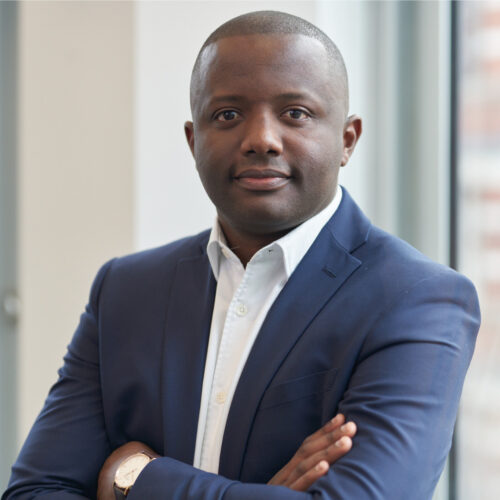
Evans Mburu
Head of Implementation
Key contacts
If you would like more information about this agreement, please reach out to our key contacts.